That familiar post-meal sluggishness — the heaviness that settles in after eating and makes you want to lie down rather than get on with your day — is something a lot of adults experience. It's not always about what you ate. Often it's about how you ate, how much, and how your digestion is currently functioning.
This article covers the most common reasons for feeling heavy after meals, what each one means practically, and the food-first steps most likely to help. It is not a diagnostic guide — if you have persistent or worsening symptoms, please see a healthcare professional.
What does "feeling heavy after meals" actually mean?
Most people describe it as a combination of: a sensation of fullness that lingers well past the meal, low energy or drowsiness, a feeling that food is sitting in the stomach without moving, and sometimes mild bloating or discomfort in the upper abdomen.
This is distinct from pain, heartburn, or sharp discomfort — those warrant a different conversation. What we're addressing here is the dull, persistent heaviness that many adults experience after most meals, regardless of how much they ate.
The most common reasons — and what to do about each
Eating too quickly
Eating fast means swallowing more air, less chewing, and less time for your stomach to signal that it's approaching fullness. Your brain takes roughly 20 minutes to register satiety signals from the gut — a delay documented by the Mayo Clinic.
Portion size
Large portions require more digestive effort. The stomach has to expand significantly, which can slow gastric emptying and create that heavy, stuck feeling for an hour or more after eating.
High-fat or high-protein meals
Fat and protein take longer to digest than carbohydrates. A meal heavy in both — think a large steak with creamy sauce — can sit in the stomach for several hours.
Inadequate hydration
Mild dehydration can slow digestive processes at multiple stages. Many adults are mildly dehydrated by the time they sit down to eat, which compounds the heaviness.
Low fibre intake
A diet consistently low in fibre can slow gut motility over time. When the digestive system isn't moving efficiently, heaviness after meals becomes more common. The NHS recommends around 30g of fibre per day for adults — most people fall well short.
Stress at mealtimes
The gut and the nervous system are closely connected. Eating while stressed, distracted, or rushed activates the sympathetic nervous system — which actually slows digestion.
The role of eating speed — and why it matters more than most people think
Of all the factors listed above, eating speed is consistently underestimated. When you eat quickly, several things happen simultaneously: you chew less thoroughly, so larger food particles arrive in the stomach; you swallow more air, which contributes to bloating and discomfort; and you give your satiety hormones less time to signal fullness before you've already eaten too much.
The practical implication is straightforward: slowing down by even 5–10 minutes per meal can reduce post-meal heaviness noticeably for many people. Putting your fork down between bites, chewing each mouthful more thoroughly, and not eating while distracted by a screen are all simple starting points.
Meal composition: what you eat matters, but so does the combination
Certain foods are inherently more demanding on the digestive system. High-fat meals slow gastric emptying — the rate at which food leaves the stomach and enters the small intestine. This is a normal physiological process, but when combined with a very large portion or eating speed, it amplifies the heaviness.
This does not mean avoiding fat. Fat is an essential macronutrient. What it means practically is being aware of combinations: a large portion of high-fat food eaten quickly is much more likely to leave you feeling heavy than a moderate portion of the same food eaten slowly.
Foods most commonly associated with post-meal heaviness
- Large portions of red meat or fatty cuts
- Creamy sauces, high-fat dairy in large amounts
- Fried foods
- Very large portions of refined carbohydrates (white bread, pasta, rice)
- Eating a large amount of food in a short time, regardless of what it is
Individual responses vary considerably. What leaves one person feeling heavy may not affect another at all. This is why a food diary — tracking what you ate, how much, how quickly, and how you felt afterwards — is more useful than any generic list of "foods to avoid".
Practical steps to try this week
Food-first starting points
- Slow down by 5 minutes. Set a gentle timer if needed. Aim to take at least 20 minutes per main meal.
- Reduce portion size by about 20% for one week and observe whether post-meal heaviness changes.
- Drink water between meals rather than with meals — aim for 6–8 glasses throughout the day.
- Add one extra serving of vegetables to lunch or dinner — the fibre supports gut motility without adding significant volume.
- Avoid screens during meals. Eating while distracted consistently leads to faster eating and larger portions.
- Keep a simple food diary for 7 days. Note what you ate, approximate portion, eating speed, and how you felt 30–60 minutes later. Patterns usually emerge within a week.
When heaviness after meals might be worth investigating further
Most cases of post-meal heaviness respond to simple dietary and behavioural adjustments. However, there are situations where the symptom may warrant a conversation with a healthcare professional:
- The heaviness is accompanied by pain, nausea, or vomiting
- You've noticed unexplained changes in appetite or weight
- The discomfort has worsened or changed in character over recent weeks
- Simple dietary adjustments have made no difference after 3–4 weeks
- You also experience heartburn, reflux, or difficulty swallowing
These may indicate conditions such as gastroparesis, functional dyspepsia, or others that benefit from professional assessment. This guide is not intended to address those situations.
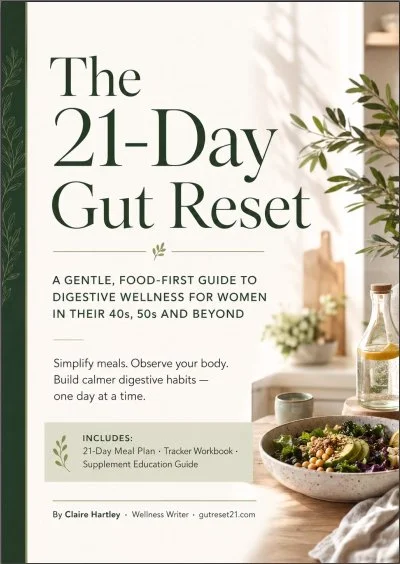
Complete bundle — instant download
Ready to follow a structured 21-day plan?
Includes the main guide, complete 21-day meal plan, printable tracker workbook, and supplement education guide.
All four PDFs · Any device
The connection to a longer-term food-first approach
Individual adjustments like slowing down or reducing portions are useful starting points. But post-meal heaviness that is consistent and long-standing often reflects a pattern rather than a single cause — a combination of eating habits, food choices, hydration, stress levels, and gut function that have built up over time.
A structured 21-day food-first approach gives you the framework to address that pattern systematically: simplifying your diet in week one, rebuilding with gut-friendly foods in week two, and personalising based on what you observed in week three. The food diary at the centre of that process is the most reliable way to identify what's actually driving your symptoms.
You can read more about how the process works in What Is a 21-Day Gut Reset?
Frequently asked questions
Why do I feel so heavy and tired after eating?
Is feeling heavy after meals normal?
What foods are most likely to cause heaviness after eating?
How can I stop feeling so full and heavy after meals?
Does stress affect digestion?

Written by Claire Hartley
Wellness writer and food-first digestive health researcher based in Melbourne, Australia. Author of the 21-Day Gut Reset. Read more about Claire →